Home
Welcome to the Exciting World of Software Testing
Success Story of Mr Sadanand Kukde – Quality Assurance Engineer shared on 13th May 2019
Hi Yogindernath, I have done B.Tech. CSE 2017 pass out and joined Accenture last year October in the Testing domain. Since then I am following the Software Testing Genius website for all sorts of help. I found it to be the best website for Testers. I cleared the training evaluation exam with the support from this website. Another great success I got when I passed ISTQB CTFL using the question banks on your website last week. Now I will get ready for the CTAL – Test Manager exam by September. Could you pls. provide me links to sample papers. Thanks to you once again.
Updated on January 7, 2024.
Published with the consent of Mr Sadanand Kukde
sadanandkukde@gmail.com

The economy always goes through a cycle of several ups and downs. It is easy to go through the good times but million dollar question that remains is, how to sail the boat when heading for the tough times? Should we wait till we are hit or should we prepare well in advance? As a Software Testing professional, it is very common these days to hear news about layoffs, but what are we going to do about it? I totally believe that when other people lose jobs, it is called a “Recession”. But when we lose ours, it is not…
Read More>>

Introduction UFT – erstwhile QuickTest Professional (QTP) is a software tool used by the testers around the world to automate their functional and regression tests for the applications. This software was initially developed by Mercury Interactive and was later christened as QTP when Hewlett Packard (HP) took over Mercury Interactive in the year 2006. HP Software Division later combined QTP with the HP Service Test to create a single software package, known as Unified Functional Testing (UFT). HP managed the software until its version 11.5. In the year 2016, when Micro Focus bought HP Software Division the product was renamed…
Read More>>
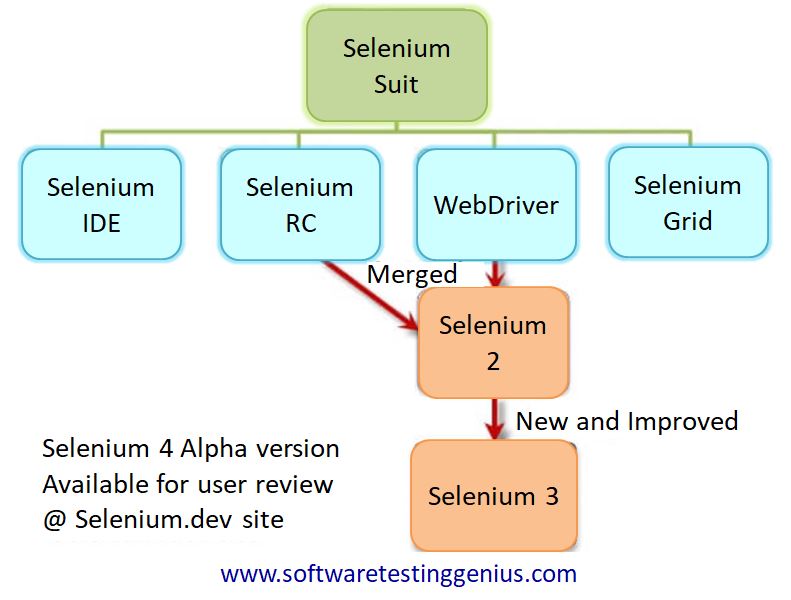
This article is for the software tester who is seeking to explore more or a beginner/novice who wants to pursue a career in Software testing. Here we will have the historical preview of Selenium, its journey through times – from its advent in 2004, till the latest version of Selenium 4 (2020). First, let us see what this Selenium is. What is Selenium and Why Selenium? Simply putting, Selenium is an open-source testing suite for testing web applications across different browsers and platforms. It is a free tool preferred because of its automation features which makes writing test cases and…
Read More>>

It remains a long cherished dream of every IT professional, be it in software development or in testing / QA, to be a team lead followed by the position of project manager. The span of such a journey varies from person to person being commensurate with his/her skills acquired over the passage of time. With years of hands-on experience on IT projects, one acquires in a natural way, traditional skills of communication, basic management, man management, agile methods, requirements engineering, software development process etc., yet that’s not enough for being an effective project manager. In the era of Agile, the…
Read More>>

The world of Technology is now on the verge of a revolutionary change. New technologies like, artificial intelligence, robotics, digital manufacturing, autonomous vehicles, biotechnology, nanotechnology, materials science, analysis of real-time data of trillions of pieces of information, modern gadgets connected to the internet are going to evolve into a “Fourth Industrial Revolution” known as “Industry 4.0” in short. Can India one of the biggest economic powers of the world with its 1.35 billion populate ignore the forthcoming changes? Not at all, the nation has to get ready to face the enormous challenges and be a part of the Fourth Industrial…
Read More>>

What is Katalon Studio? Katalon Studio is an automation testing tool that extends the capabilities of Selenium and Appium. This tool can be applied to Web, API and mobile testing and was ranked as a top 2018 automation testing tool. The software comes in a complete package and framework; so you don’t have to install any other components while working with Katalon Studio. Above all, it is free. Here’s what you can do with the tool: ● Automate your web and mobile testing ● Can do web services (API) testing ● Create quick automation tests ● Can do record and…
Read More>>
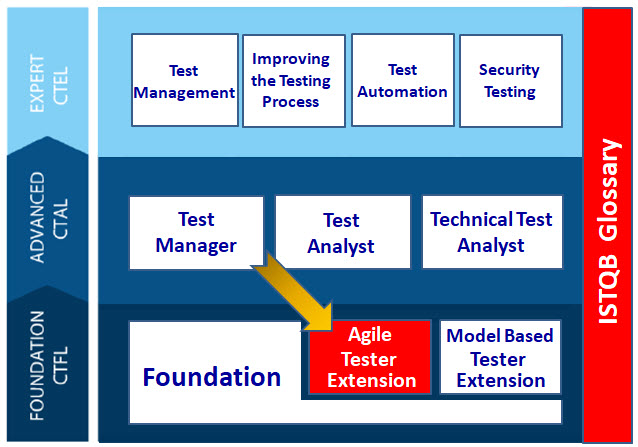
Quick Start to preparation for ISTQB Agile Tester Extension Exam What are ISTQB “Extensions”? There had been a great demand for enhancing competence in vertical testing. Hence ISTQB came out with a novel concept of “Extension”. “Extensions” are certification modules focused on topics, like: 1) Domain-specific testing practices; 2) Specific Testing Techniques; 3) Specific Testing Methods; To pursue any “Extension”, ISTQB Foundation Level Certification (CTFL) is an essential pre-requisite. ISTQB came out with its first “Extension” by the name “Agile Tester” in June 2014. A) Check out if “ISTQB Agile Tester Extension” exam is meant for you? Are you already having ISTQB Foundation certificate (CTFL)? &…
Read More>>
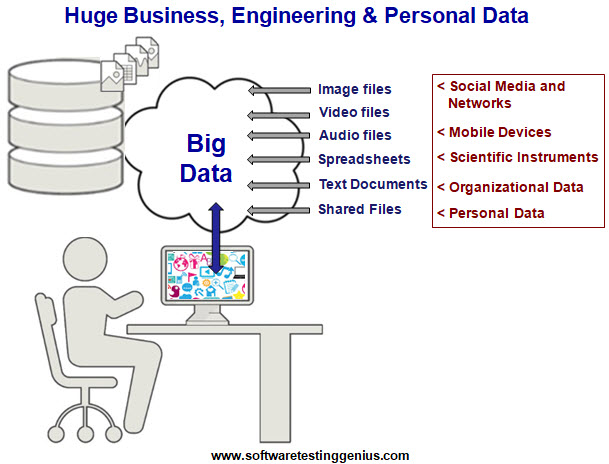
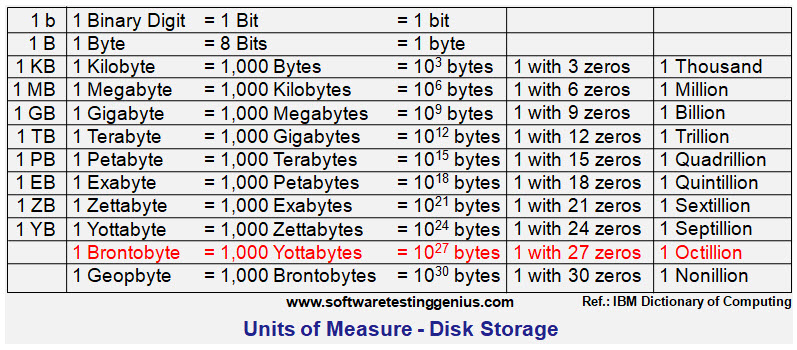
An insight to the revolution of “Big Data” – A Primer During the 1990s, no one could imagine the pace at which the technology backed by internet will evolve. In 1988-89 hard disk drives of about 100MB storage capacities were sufficient for 386 desktops. In a span of around 10 years, the storage capacity requirement shot up to around 2GB with an increase of around 20X. By the year 2015 users were uncomfortable even with 1TB capacity that is one thousand times increase in 15 years. According to Prof. Hal Ronald Varian (Chief Economist – Google), 5 EBs (Exabytes) of…
Read More>>
Glossary of Terms related to Big Data-Alphabet A to B I am giving you a full length repository of definitions in an alphabetically sorted order 1) This database explains various concepts, terms and definitions designed to help communication in the field of Big Data and related disciplines. 2) An effort has been made to make this database quite exhaustive with maximum possible definitions & terms exclusively related to Big Data. These definitions & terms explained by several experts of Software Testing field have been included in it. 3) You are most welcome to contribute & tell us the missing terms…
Read More>>
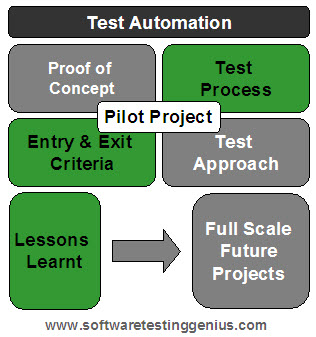
Importance of doing a Pilot Project before Full Scale Automation Tool Roll Out Before delving on the intricacies of going into a pilot project, I would like to describe few common pitfalls involved in the large-scale implementation of automation tools. 1) “Ease of use” of course being one of the key consideration in selecting an automation tool, can never overlook the prime requirement of good functionality. A tool can easily be misused while it may fail to do few simple things. 2) In the absence of a structured assignment of roles and responsibilities towards centralized methodology of using the tool,…
Read More>>

Security Testing Made Simple by Smart Test Managers Intelligent software testing managers lay their key focus on the security testing of their system, right from the early stages of the system’s life cycle. The process begins with the drafting of the security test documents. Your starting point can be the security test plan if you were assigned to perform functional testing on a system that is new or new to you, & which can be to familiarize yourself with the product. Generally people prefer one security test plan per release, but you may have one or more functional test plans,…
Read More>>
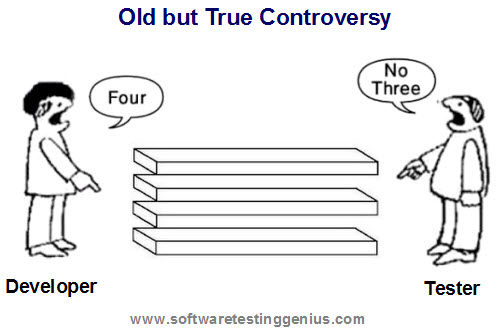
An insight to Innovative Agile or Spiral Software Testing The intent of life cycle testing promotes testing by software testing professionals from some agency outside the development organization. The prime advantage of testing with life-cycle approach are that we have crystal clear requirements defined before hand, and it is comparatively easier for an external expert to verify the facts. Software testing is generally considered as a destructive activity aimed to challenge the work done by the developers. On the contrary, spiral-testing psychology promotes more cooperation among the development organization and the quality assurance. The is based upon the hypothesis that,…
Read More>>
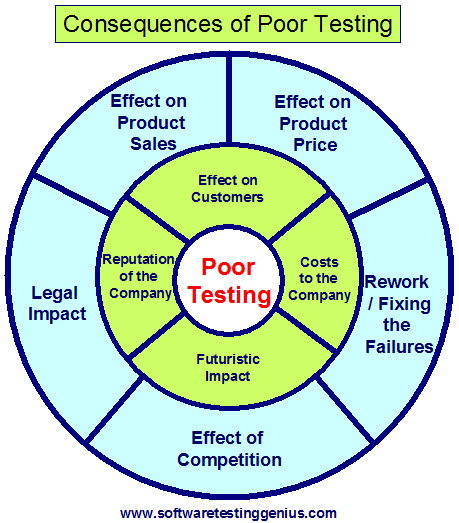
How to perform Poor Testing-A Primer for Self Improvement This article is not aimed at inculcating negativity among the software testing community, rather it is a live pointer to various mistakes poor testers make in the real world scenario. This is better viewed as an opportunity for self-improvement in our software development initiative. Poor testing leaves an adverse impact on the customer experience of the software product. Such poor impact on the customer leaves big dent on sales of the software product as well as affects the profitability of the company. It can lead to legal implications as well on…
Read More>>